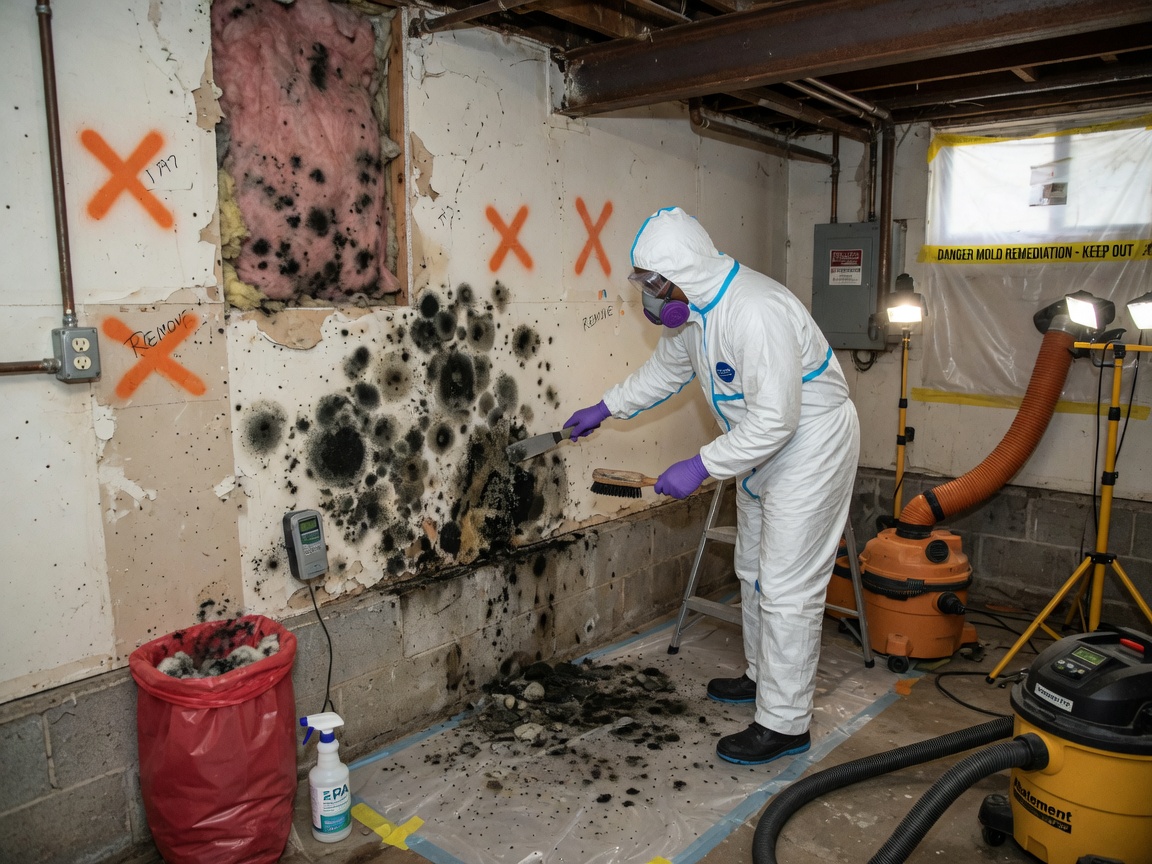
Royal Oak homes built before 1970 in neighborhoods like Northwood and along the Woodward Corridor often have plaster walls and limited attic ventilation that trap moisture when temperatures drop below freezing. Black mold frequently appears behind baseboards or in crawl spaces after roof leaks or ice dam issues common in Oakland County winters. Proper removal requires negative air machines and HEPA filtration to avoid spreading spores into living areas near Memorial Park or the Royal Oak Music Theatre district.
We map moisture sources using thermal imaging before any demolition because simply spraying affected drywall in Ferndale-adjacent properties can leave hidden colonies in subflooring. Cold weather delays drying times, so we stage dehumidifiers and air movers for several days rather than rushing the job. Homeowners in Downtown Royal Oak sometimes discover growth after finished basements were added without proper vapor barriers, requiring us to open walls in sections to confirm the full extent.
Clearance testing follows every project because spores from Stachybotrys can linger in HVAC returns that serve multiple units in Madison Heights border homes. We bag and remove all contaminated materials the same day to prevent cross-contamination during transport through narrow Royal Oak alleys. Winter projects need extra containment sheeting to handle wind gusts that pick up once leaves are down.
Nearby Birmingham properties with similar brick construction show the same pattern of mold starting at window sills where single-pane glass meets uninsulated framing. We always check the condition of original cast-iron drains because slow leaks under slabs create the persistent dampness that black mold needs to return.
Technician insight
In Royal Oak the thing that catches most people out with black mold removal is older plaster walls in Northwood homes that hide growth behind layers of paint and wallpaper; cold winters drive condensation into those cavities and the only way to confirm extent is opening more than the obvious stain.
Northwood Attic After Ice Dam
A homeowner in Northwood noticed ceiling stains after a heavy snow melt. We found black mold across 18 feet of rafters where ice dams had forced water under the shingles. Containment was built in the attic access, affected insulation removed, and drying completed over four days before new insulation was installed.
Black Mold Removal Services We Offer
✓Attic Black Mold Remediation
Removes mold growth in poorly vented attics common to Northwood homes after ice dam leaks, including insulation replacement and ridge vent upgrades.
✓Basement Mold Containment
Sets up sealed barriers and negative pressure for finished basements in Woodward Corridor properties where winter condensation meets older foundation walls.
✓Crawl Space Mold Removal
Treats dirt-floor crawl spaces under Royal Oak homes near Memorial Park that lack vapor barriers and collect moisture during humid summers.
✓HVAC Duct Mold Cleaning
Cleans and sanitizes ductwork in multi-story homes serving Downtown Royal Oak where spores travel through shared returns after hidden leaks.
✓Window Sill and Trim Remediation
Targets black mold at single-pane windows in pre-1960 Royal Oak housing stock where cold air infiltration causes repeated condensation.
Black Mold Removal Cost in Royal Oak, MI
| Service | Typical Range | What Affects It |
|---|---|---|
| Small area under 10 sq ft | $450–$850 | Accessible wall or trim work in single room |
| Attic remediation | $1,200–$2,400 | Includes insulation removal and disposal |
| Basement section | $900–$1,800 | Depends on finished vs unfinished space |
| HVAC duct cleaning add-on | $350–$650 | When mold has entered returns |
Ranges are typical for Royal Oak, MI and confirmed with an exact written quote before any work starts.
How it works
- 1
Initial Moisture Mapping
We inspect attics, basements, and wall cavities using moisture meters and infrared cameras to locate all affected zones in the specific Royal Oak home.
- 2
Containment Setup
Plastic barriers and negative air machines isolate the work area so spores do not migrate to living spaces or HVAC systems.
- 3
Removal And Disposal
Contaminated materials are cut out, bagged, and removed from the property the same day while surfaces receive antimicrobial treatment.
- 4
Drying And Clearance
Industrial drying equipment runs until readings drop below safe levels, followed by independent air sampling before barriers come down.
Pricing
Pricing determined after on-site inspection; typical projects vary by square footage and hidden damage.