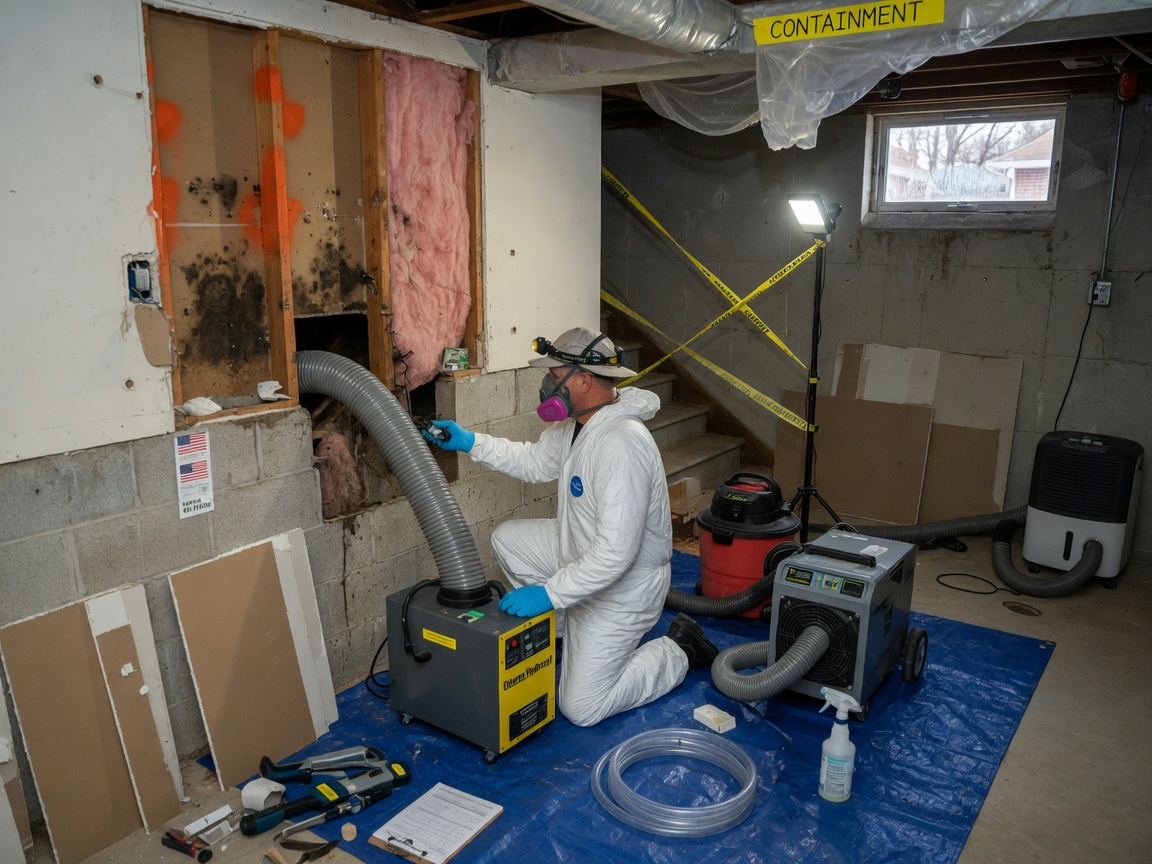
Royal Oak's older homes along the Woodward Corridor and in Northwood often feature uninsulated basements where humid continental winters drive condensation against cold concrete walls. This moisture feeds hidden mold growth behind paneling or under flooring, releasing persistent musty odors that standard cleaning cannot eliminate. Effective remediation requires locating the moisture source first, then deploying negative air machines and HEPA filtration to capture spores without spreading them into living spaces shared with nearby Ferndale or Madison Heights properties.
In Oakland County, many pre-1970s homes around Memorial Park and the Royal Oak Music Theatre district have crawl spaces with dirt floors that absorb seasonal runoff. Odor remediation here demands vapor barriers and targeted antimicrobial application rather than simple air fresheners, because residual mycotoxins can linger in porous materials like subflooring. Technicians must also account for the Detroit Zoo area's higher water table, which increases the risk of recurring odors if drainage issues remain unaddressed.
Homeowners frequently overlook how summer humidity following harsh winters reactivates dormant mold colonies in attics with poor ventilation. Proper odor remediation includes thermal imaging to detect temperature differentials and removal of affected insulation before sealing. This approach prevents cross-contamination into adjacent rooms and addresses the specific airflow patterns common in Royal Oak's two-story brick and frame houses.
Birmingham and Ferndale border properties often share sewer line vulnerabilities that introduce organic odors mistaken for mold. Remediation protocols require gas detection alongside spore sampling to distinguish between sources, ensuring the treatment plan matches the actual contaminant rather than applying blanket deodorizers that fail in cold-weather conditions.
Technician insight
In Royal Oak, the thing that catches most people out with Odor Remediation is how older Northwood basements with clay-heavy Oakland County soil hold winter meltwater against foundations long after visible leaks stop. Homeowners often paint over stains thinking the smell will fade, but without removing the saturated drywall behind paneling the odor returns every humid summer.
Hidden Odor in Northwood Basement
A homeowner near Northwood reported a persistent musty smell after a heavy winter thaw. Inspection revealed condensation behind paneling on an uninsulated concrete wall. We removed the affected drywall, treated the concrete, and installed a vapor barrier. Odors cleared and did not return the following season.
Odor Remediation Services We Offer
✓Basement Odor Removal
Addresses musty smells from condensation and hidden mold in Royal Oak basements by removing affected materials and installing moisture barriers suited to older Oakland County foundations.
✓Attic Mold Smell Remediation
Targets odors from insulation contaminated by roof leaks or poor ventilation common in Northwood and Woodward Corridor homes after cold winters.
✓Crawl Space Deodorization
Removes organic odors from dirt-floor crawl spaces in pre-1970s Royal Oak homes using vapor barriers and targeted cleaning to prevent migration into living areas.
✓Post-Water Damage Odor Treatment
Eliminates lingering smells following leaks or flooding in areas near Memorial Park by drying, cleaning, and treating porous materials before odors set in.
✓HVAC Odor Remediation
Cleans mold-related odors from ductwork in Royal Oak homes where cold-weather condensation promotes growth inside older forced-air systems.
Odor Remediation Cost in Royal Oak, MI
| Service | Typical Range | What Affects It |
|---|---|---|
| Initial Odor Assessment | $150–$300 | Includes inspection of one primary area; additional rooms increase cost |
| Basement Odor Remediation | $800–$2,200 | Depends on square footage and whether flooring must be removed |
| Attic Odor Treatment | $600–$1,800 | Varies with insulation type and roof access in two-story homes |
| HVAC System Cleaning | $400–$900 | Covers ductwork in typical Royal Oak single-family homes |
Ranges are typical for Royal Oak, MI and confirmed with an exact written quote before any work starts.
How it works
- 1
Source Identification
Inspect for moisture entry points using moisture meters and thermal imaging in Royal Oak basements and attics affected by winter condensation.
- 2
Containment Setup
Isolate the affected zone with plastic barriers and negative air pressure to prevent spore migration into adjacent living spaces.
- 3
Material Removal
Extract and dispose of porous materials holding mold and odor, then clean non-porous surfaces with appropriate antimicrobial solutions.
- 4
Air Purification
Run HEPA air scrubbers and apply odor-neutralizing agents to capture remaining particles and neutralize mycotoxin residues.
- 5
Verification and Prevention
Test air quality post-treatment and recommend ventilation or drainage fixes specific to local soil and climate conditions.
Pricing
Pricing varies by extent of hidden growth and access difficulty in older homes; upfront quotes provided after inspection.