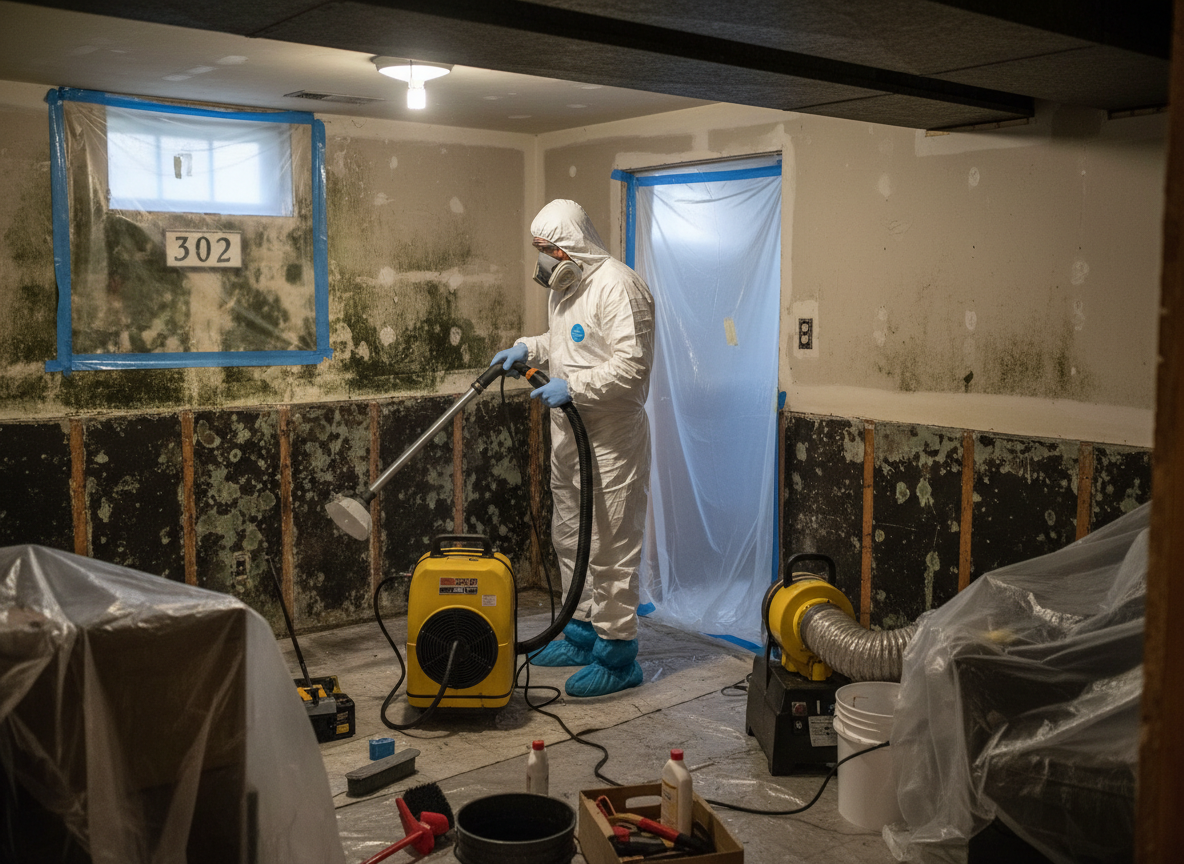
Royal Oak's housing stock, built mostly before 1970 in areas such as the Woodward Corridor and Northwood, features plaster walls, uninsulated basements, and older HVAC systems that trap moisture when winter temperatures drop. These conditions turn minor leaks into hidden mold colonies behind lath and plaster or inside ductwork. Remediation crews must open walls carefully to avoid disturbing settled spores while protecting adjacent living spaces in tightly packed lots near Memorial Park.
The region's humid continental climate brings rapid freeze-thaw cycles that push water through foundation cracks in Oakland County homes. After snowmelt or heavy spring rain, crawl spaces under bungalows near the Detroit Zoo often stay damp long enough for black mold to colonize joists. Proper remediation includes negative-air machines, HEPA filtration, and antimicrobial rinses followed by dehumidification sized for the home's square footage and soil drainage patterns.
Nearby cities like Birmingham, Ferndale, and Madison Heights share the same glacial till soils that hold water against foundations, so jobs frequently cross city lines when moisture travels under shared driveways. Technicians document every step with moisture meters and photo logs because Royal Oak code enforcement can require proof of source correction before occupancy is restored.
Homeowners along Woodward often discover mold only after musty odors reach the first floor. Successful remediation always includes locating and fixing the moisture source—usually roof flashing, window wells, or dryer vents venting into attics—before any surface treatment begins.
Technician insight
In Royal Oak, the thing that catches most people out with Mold Remediation is cold-winter condensation inside uninsulated plaster walls of 1920s–1950s homes along the Woodward Corridor. Homeowners seal the basement tight for heat and trap moisture that never dries before the next freeze, so the job always starts with opening the space back up rather than just spraying visible growth.
Northwood Bungalow Winter Discovery
Homeowner noticed musty smell in the finished basement after January thaw. Inspection found hidden mold behind paneling where roof runoff had entered through a cracked window well. Crew removed affected drywall and insulation, dried the block wall, and advised rerouting the downspout away from the foundation. Odor cleared and air samples passed within a week.
Mold Remediation Services We Offer
✓Basement Mold Remediation
Removes colonies from concrete walls and joists in older Royal Oak basements while addressing winter condensation from uninsulated foundations.
✓Attic Mold Removal
Treats mold on rafters and insulation caused by poor ventilation in pre-1960 homes near Downtown Royal Oak and the Royal Oak Music Theatre.
✓Crawl Space Mold Treatment
Encapsulates soil and treats joists in Northwood and Ferndale crawl spaces where seasonal thaw keeps moisture levels high.
✓HVAC Mold Cleaning
Cleans mold from ductwork and coils in homes along the Woodward Corridor where older forced-air systems spread spores during heating season.
✓Bathroom Mold Remediation
Removes tile and drywall mold in Madison Heights and Birmingham bathrooms where exhaust fans fail during long, cold winters.
Mold Remediation Cost in Royal Oak, MI
| Service | Typical Range | What Affects It |
|---|---|---|
| Small contained area (under 10 sq ft) | $450–$850 | Single wall or ceiling spot in one room |
| Basement section remediation | $1,200–$2,400 | Includes drying; price rises with joist involvement |
| Attic treatment | $900–$1,800 | Depends on insulation removal and ventilation fixes |
| HVAC system cleaning | $650–$1,100 | Ductwork plus coil treatment in older systems |
Ranges are typical for Royal Oak, MI and confirmed with an exact written quote before any work starts.
How it works
- 1
On-Site Inspection
Technician maps moisture sources with meters and infrared cameras, checking basements, attics, and HVAC in the specific Royal Oak neighborhood.
- 2
Containment Setup
Plastic barriers and negative air machines isolate the work zone to prevent spores from reaching living areas during removal.
- 3
Physical Removal
Affected materials are cut out and bagged; surfaces are HEPA-vacuumed and treated with EPA-registered antimicrobials.
- 4
Drying and Verification
Industrial dehumidifiers run until readings meet industry dry standards, followed by post-remediation air sampling.
- 5
Source Correction Guidance
Written recommendations cover gutter repairs, insulation upgrades, or ventilation changes needed for the home's age and location.
Pricing
Pricing follows inspection; quotes reflect home age, affected square footage, and whether HVAC or structural materials require replacement.